There’s AI that helps real people create better live streams, and there are AI livestreamers built around synthetic hosts.
One helps you connect with your people. The other can put technology between you and your audience.
Right now, both are called “AI live streaming.” Here, you’ll learn the difference.
AI live streaming that supports you
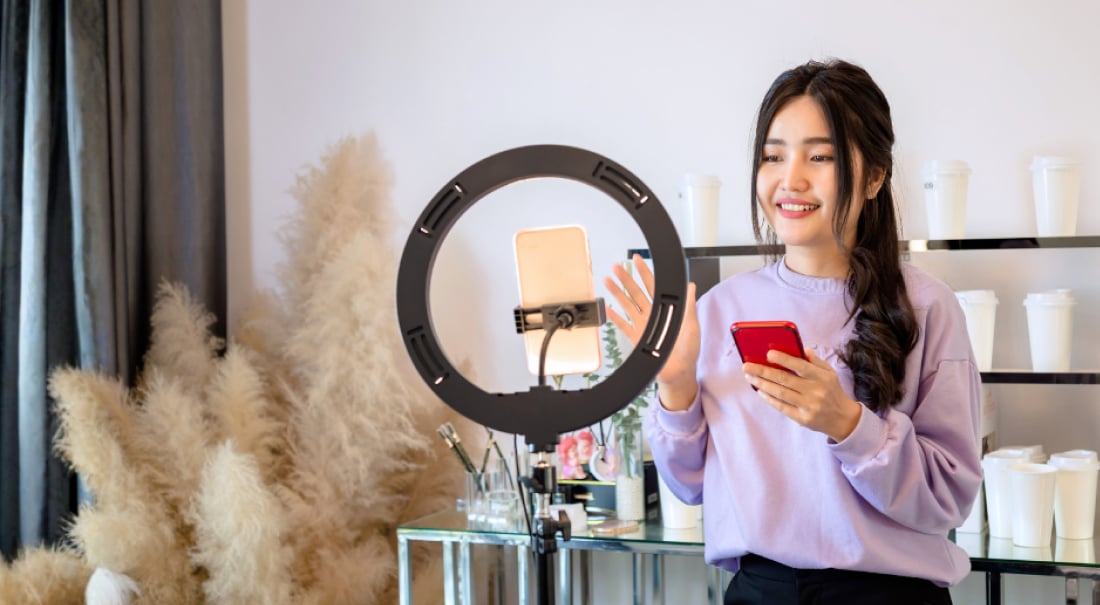
You, as a creator, already use this kind of AI almost every day, and if you don't, you should because these tools make live streaming easier and less stressful:
-
Noise cancellation, so your dog's barking isn't part of your concert
-
Audio cleanup and voice leveling, so you can walk around and present without worrying about your audience clicking out of your stream
-
Camera filters and auto-framing, which fix your lighting and keep the shot where it should be, instead of accidentally showing your half-naked spouse walking through the background during a demo
-
Live translation, so more people around the world can understand your message
-
Live captions, because they help the hard of hearing and disabled, and the people watching your cooking demo from a desk at work with the sound off
-
Clipping and repurposing a stream into shorter content, because editing takes time and skills you may not have, and repurposing is one of the best ways to grow a livestream
-
Motion-capture avatars, so you can appear on screen as an animated character driven by your own real-time face and movements, without ever showing your actual face
In short, AI can be your production crew when you don't have the resources, time, skills, or energy for one. And it's worth remembering that plenty of full production teams use the same AI to do their jobs, too.
This kind of AI live streaming helps you connect with your audience and build a community, while you get to focus on sharing your gift or skill, the thing you actually wanted to be doing in the first place. That's a win for you and a win for the people watching.
AI live streaming that replaces you
The other version of AI live streaming is a synthetic host: a computer-generated avatar that completely replaces you.
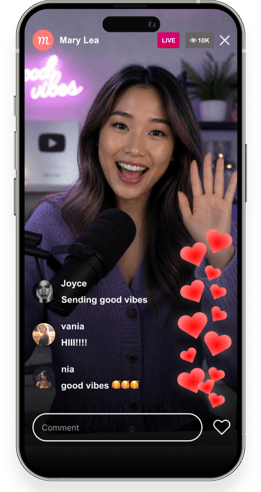
These avatars can be built from your own likeness, someone else's likeness, or a completely synthetic likeness, and they come with a fully synthetic voice and personality to boot.
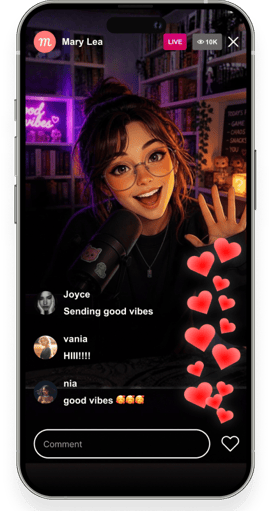
Synthetic AI live streamers are already being used in a growing number of areas, such as e-commerce and entertainment. For example, an AI live streamer reportedly generated $7.65 million in sales during a single 6-hour livestream.
There are also AI news anchors delivering live broadcasts in multiple languages around the world: Lisa in India, Fedha in Kuwait, Ren Xiaorong in China, and TVC News's AI anchors in Nigeria.
Why is there an entire industry fueling synthetic AI live streamers?
There's a clear, unsentimental logic behind it, and it comes down to economics. Synthetic hosts are cheap, and some tools let you create one from just two minutes of footage, fast enough to have one running well in under 5 minutes. Plus:
-
A synthetic host never calls in sick, never takes parental leave, and never draws a salary. It doesn't need health insurance, PTO, or a raise. That avoids nearly all costs of employing someone: recruiting, onboarding, training, and building and maintaining a culture people want to work in.
-
An avatar live streamer can run the same stream 24 hours a day, across multiple accounts and time zones, without a shift schedule. That's exactly why AI livestreamer influencers and adult content operators are adopting it so quickly: they can be "live" and earn around the clock.
-
An AI live streamer never has a bad day on camera or says the wrong thing in the moment, so there are no PR problems.
-
Creators and brands don't need to invest in gear, wardrobe, or livestream strategy and planning.
-
Companies and creators alike can create multiple versions of an AI live streamer for very little money, test them all, find the ones that perform best, and clone them ad nauseam.
Of course, all of this has created an ecosystem around AI live streaming. Some companies build and sell the avatars themselves, platforms built entirely around hosting AI-run livestreams, agencies that manage portfolios of synthetic hosts the way a talent agency manages people, and investors funding all of it because the economics work.
The effects of AI live streaming
-
Some are built on stolen work: Some synthetic live streamers are trained on real creators' voices, mannerisms, and presence, usually without consent or payment.
-
It can create distrust: When viewers can't tell if they're watching a real person, they start doubting what they see and hear more broadly.
-
It's largely unregulated: These avatars can be programmed to say almost anything, and there's currently no real body of regulation governing what they're allowed to claim or how they're allowed to behave.
-
It creates information noise: When there's this much unregulated synthetic information flooding every channel, people spend more time sifting through the data to find the correct information they need.
-
It can't be held accountable: When a human live streamer misrepresents a product or behaves immorally, they face real consequences: public backlash, income loss, and dissolution of communities. An avatar doesn't have to deal with any of that. If one gets a bad reputation, an operator can simply retire it and launch a new one with a clean slate.
These issues aren't hypothetical. They're already affecting human creators, live streamers, and their audiences.
It's not uncommon for a live streamer to get accused of being AI mid-broadcast or to have to address it directly to their audience. For example, one 57-year-old live streamer's broadcasts, reaching new audiences overseas, have led viewers to repeatedly dismiss that he's a real person.
What can you do to protect yourself against synthetic AI live streamers?
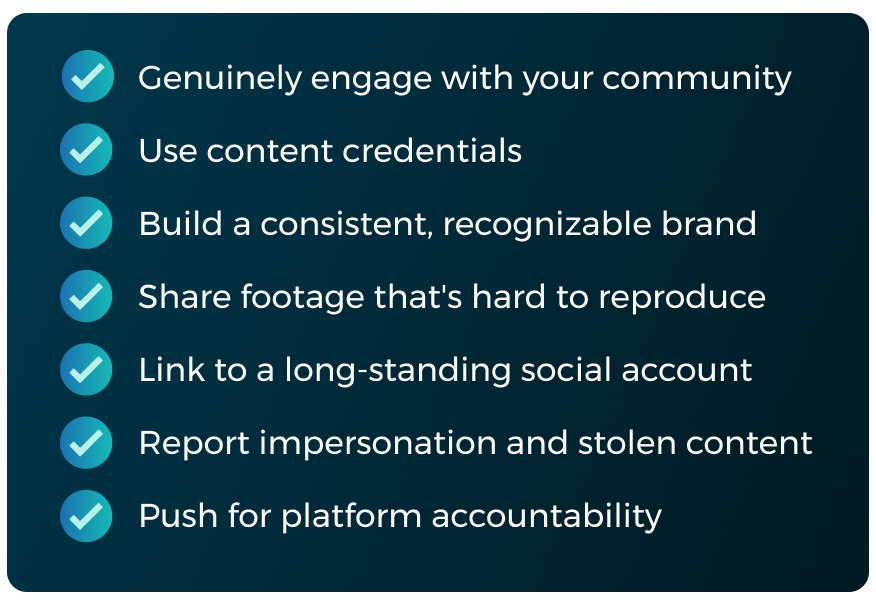
Here's what you, as a creator, can do in the face of AI live streamers:
-
Get close with your community through genuine interaction: Don't perform; be yourself. Consider streaming to your own private spaces instead of wide-open public platforms, where footage and audio of you are easier to scrape and use to train a synthetic version of you. Nurture that closeness through email lists, community spaces, and other channels that don't depend entirely on an open algorithm.
-
Use content credentials: These are metadata attached to a piece of content. Think of it like a shipping label stuck to a package — it tells anyone who checks exactly where the thing came from and what's happened to it since. A viewer or platform can check that label directly to verify your authenticity.
-
Build a consistent, recognizable brand: You can't watermark a live broadcast the way you can a static piece of content, but the same idea works differently here: a consistent logo overlay, a recognizable intro, a distinct visual style, a voice and manner your regulars can recognize and would notice if it looks or sounds "off." That consistency works as a watermark of sorts, which makes it a certain degree more difficult for synthetic clones to reproduce.
-
Share footage that's difficult for a synthetic avatar to reproduce: Post the setup, the equipment checks, the casual moments before you go live, and after you end, because that can make it more difficult for a synthetic avatar to replicate, because it has neither a setup nor a process.
-
Link to a long-standing social account: Point your audience to an account you've had for years, one where people can see you as a human going through life over a long period of time, like birthdays, moves, and bad haircuts. That kind of history is hard to fabricate after the fact and gives your audience something real to cross-check you against.
-
Report impersonation and stolen content: If your or another streamer's likeness or content is being used to train or promote a synthetic avatar without consent, platforms generally have reporting processes for that:
Unfortunately, even though the channels for reporting exist, enforcement is still inconsistent and sparse at best.
-
Push for platform accountability: Speak up. Flag bad actors, call out unclear labeling, and tell platforms directly when you see a synthetic host operating without disclosure. Policy changes tend to follow pressure, not the other way around.
Already, creators and communities pushed for policy changes. In 2026, TikTok Shop banned AI-generated voices and pre-recorded audio from promotional livestreams entirely, requiring sellers to use real-time human communication or face commission restrictions, content removal, and account bans.
Let AI live streaming be a tool for success
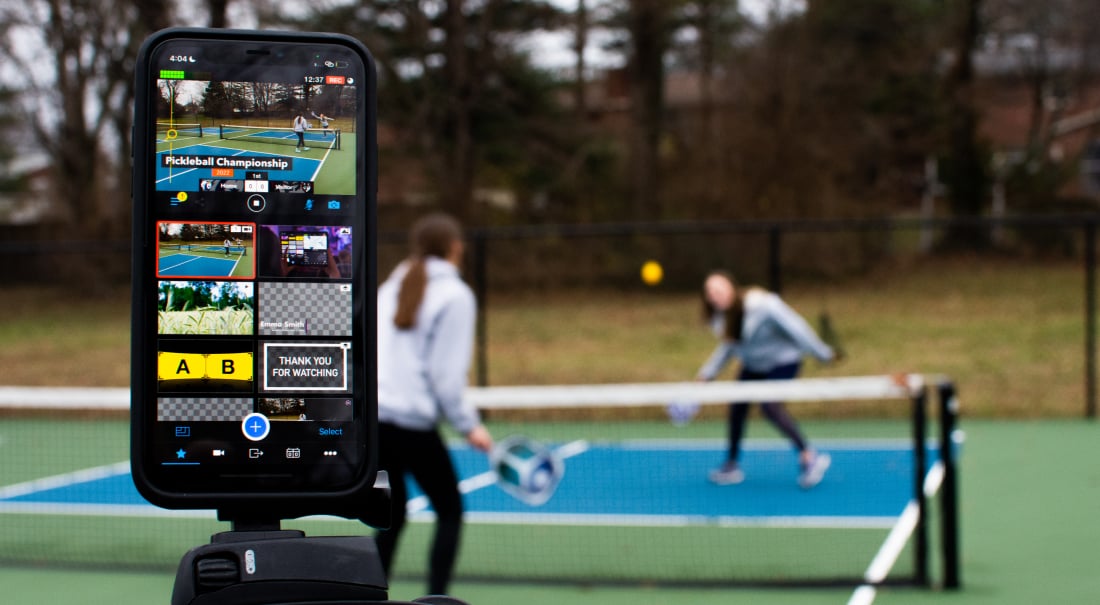
The best use of AI live streaming is simple: let the technology handle the production work that gets between you and your audience.
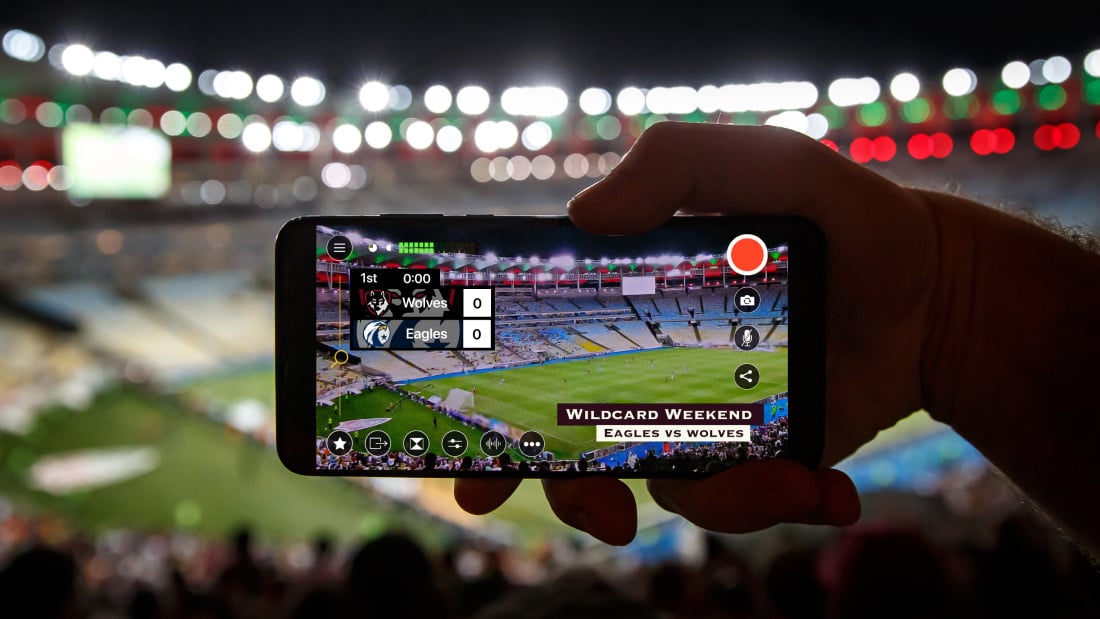
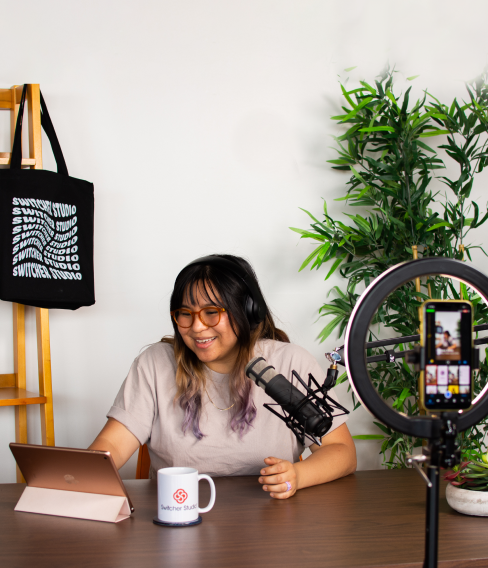
Switcher gives you the production tools to make a real, human-led livestream more engaging:
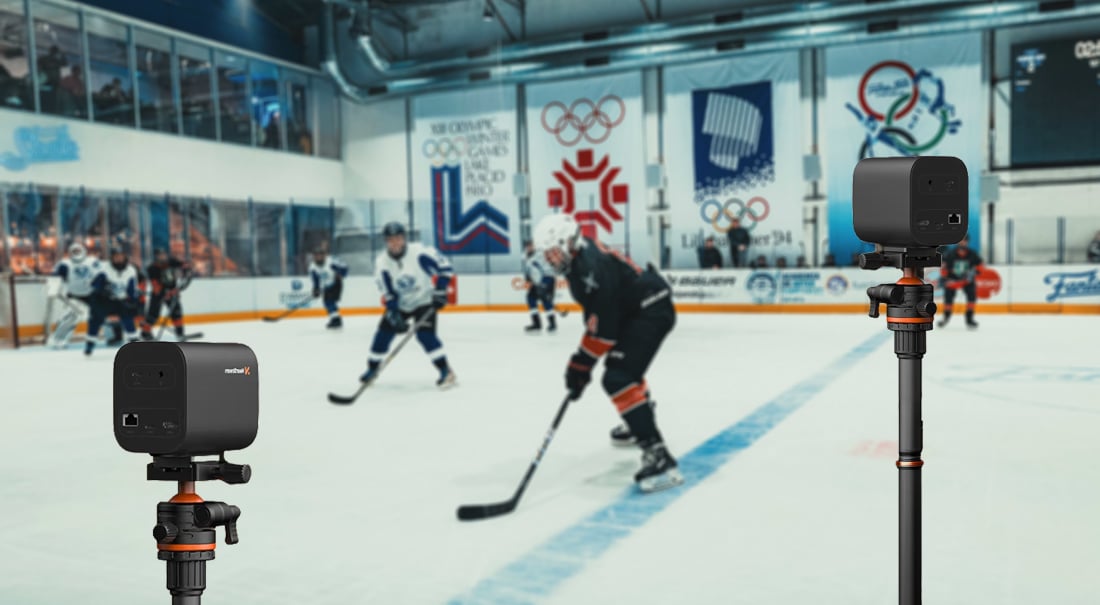
- Multicamera production, so your audience sees you the way you actually look and move, and gets to see the real environment and process around you.
- Clipping and repurposing, so one real stream becomes a week of real content.
- Private streaming links, which keep your footage private.
- Branding tools so your stream is unmistakably and consistently yours.
None of it replaces you. All of it helps your audience see more of you. Try Switcher for free today.
Subscribe to the blog
Sign up to receive notifications whenever a new blog post is published. You may unsubscribe at any time.
Share
About the Author