People don’t just show up on Sundays anymore. They join from living rooms, hospital beds, long drives, and quiet mornings at home.
That means your church live stream plays a vital role in how people stay connected and discover your community.
In this article, we’ll explore:
-
Why live streaming is becoming part of everyday church life
-
What you need to live stream your church service
-
How to choose the right streaming setup for your church
-
How to prepare for your church live stream with confidence
-
How to create a meaningful online experience people want to return to
Let’s start with why this matters in the first place.
Why live streaming your church services matters
When done well, church live streaming can support your mission and become an extension of your ministry. Here’s what that looks like:
It keeps your community connected
In-person gatherings still matter deeply, but they’re no longer the only way people participate.
According to the Pew Research Center, about 27% of Americans regularly watch religious services on screens, and many of those viewers also attend in person at times.
A church live stream helps people stay connected to your community over time, even when they can’t be in the room. Whether someone is traveling, at home with family, or walking through a difficult season, they still have a way to remain part of what’s happening.
People follow along, reflect, and respond as the service unfolds. They recognize familiar faces, hear voices they trust, and experience the same message alongside others.
That shared participation builds a deeper sense of belonging. It helps people feel included, not separate, even when they’re watching from a distance.
It opens the door to new people
For many people, your live stream is the first step toward your church.
Before they ever walk through your doors, they’re trying to understand what it’s like to be part of your community. A live stream gives them a way to do that at their own pace, without pressure or expectations.
They can listen, observe, and get a sense of your message, your rhythm, and your people. They can decide if this feels like a place where they belong, long before they attend in person.
That matters more than ever. People are more thoughtful about where they spend their time, and more cautious about stepping into unfamiliar spaces. A live stream lowers that barrier.
Over time, that first interaction can turn into something more. What starts as a quiet visit online can lead to someone showing up in person, already feeling a sense of familiarity and connection.
What do you need to live stream your church service?
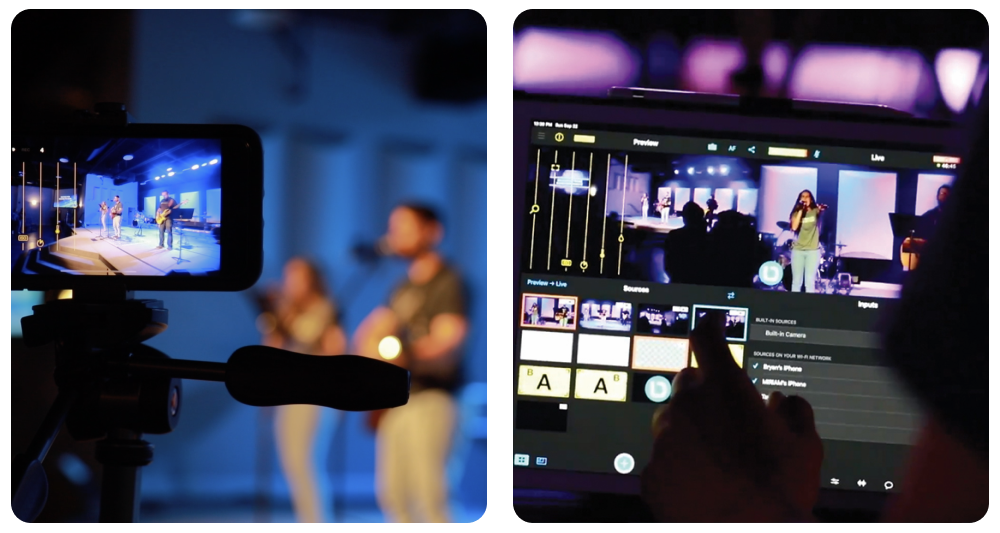
Which equipment is necessary for church live streaming? No matter your setup, the building blocks are the same:
-
A camera (iPhone, iPad, or a dedicated camera): This is how people see your service. You don’t need expensive or complicated gear — just something that delivers a clear, steady image so viewers can stay focused on what’s happening.
-
A device to run your live stream (Mac, iPad, or iPhone): This is what powers your stream. In many cases, this can double as your camera if you’re looking to keep your setup super simple and easy to manage.
-
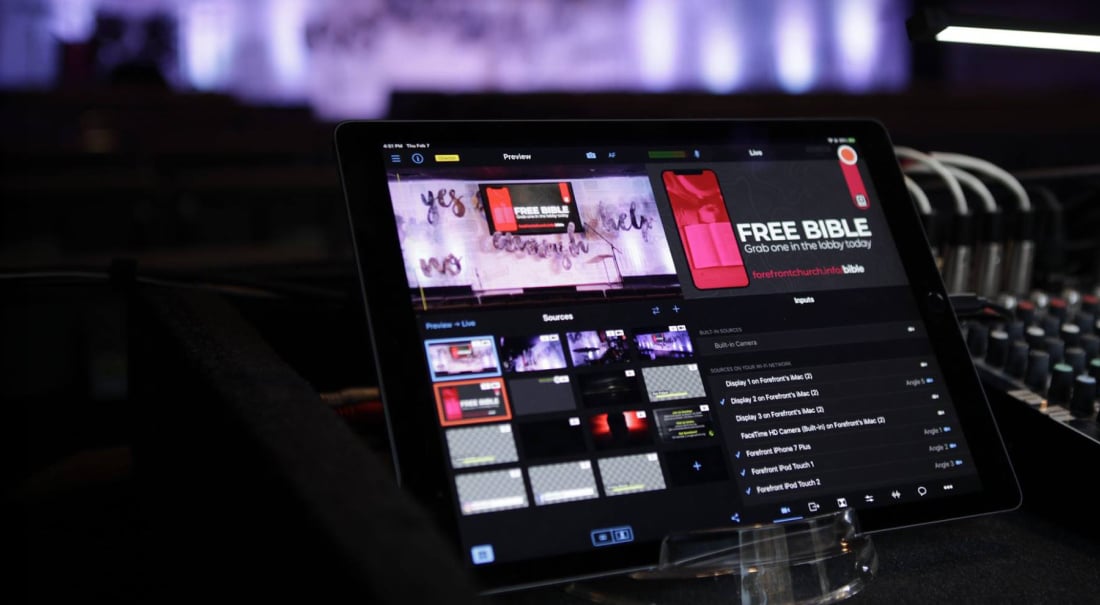
Church streaming software (like Switcher): Your software turns your setup into a system. This lets you stream with multiple cameras and reach multiple platforms at once. When you’re ready, you can also use it to add graphics and text overlays, customize branding, collect donations online, and more.
-
A reliable internet connection: Your connection holds everything together. A strong, stable signal is essential for streaming in real time. Aim for at least 3 Mbps for HD and closer to 6 Mbps for Full HD.
-
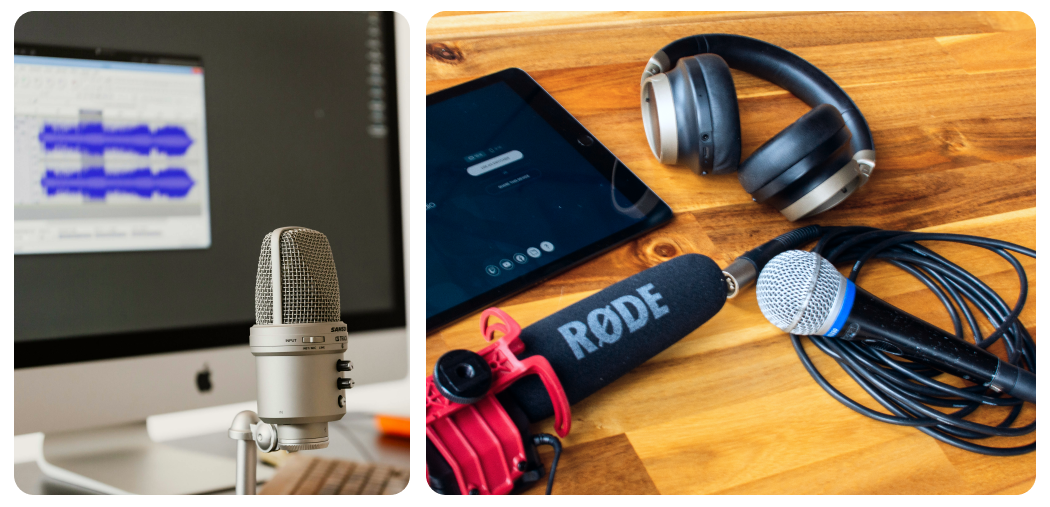
Audio gear (built-in or external microphones with an interface or adapter): Audio is often the most important technical factor. If people can’t hear clearly, they won’t stay.
How to choose the right streaming setup for your church
Not every church needs the same setup. Some teams run services with one person and one device. Others coordinate multiple cameras, audio, and volunteers.
The best setup is the one your team can run consistently. To choose the right level, ask:
-
How many people do we have available each week?
-
How repeatable is our current process?
-
Where do we feel friction or stress?
Let’s run through three setups. The goal is to choose a level that fits your team and run it well.
A simple setup (one person, one device)
If you’re a small church or working with a single volunteer, simplicity matters most. A strong setup at this level looks like:
-
One device (iPhone or iPad) to use as a camera and to broadcast your stream
-
A stable internet connection
-
Built-in device mic or a simple external microphone input
That’s enough to create a clear, reliable church live stream.
At this stage, the priority is consistency. A setup you can run every week without stress will always outperform a complex setup you can’t sustain.
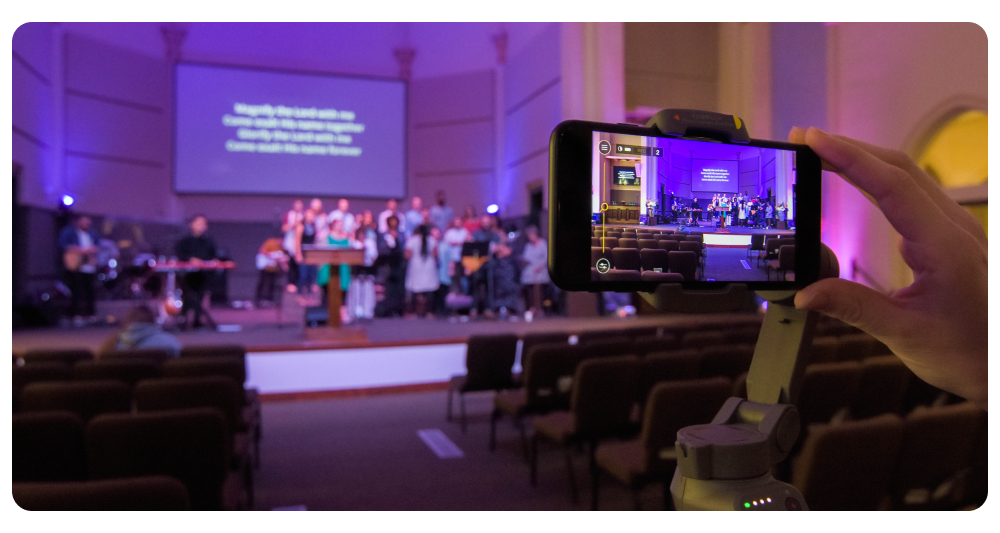
A growing setup (small team, more consistency)
As your church grows, so do expectations. You may have multiple volunteers, more services, or different ministries going live throughout the week.
Now, your setup needs to support a more structured experience. This often includes:
-
Multiple camera angles (speaker, wide shot, worship)
-
Simple graphics or lyrics on screen
-
A consistent look across services
-
A workflow different team members can step into easily
At this level, your challenge isn’t just quality, it’s repeatability.
The best live streaming solutions here are the ones your whole team can learn quickly and use with confidence.
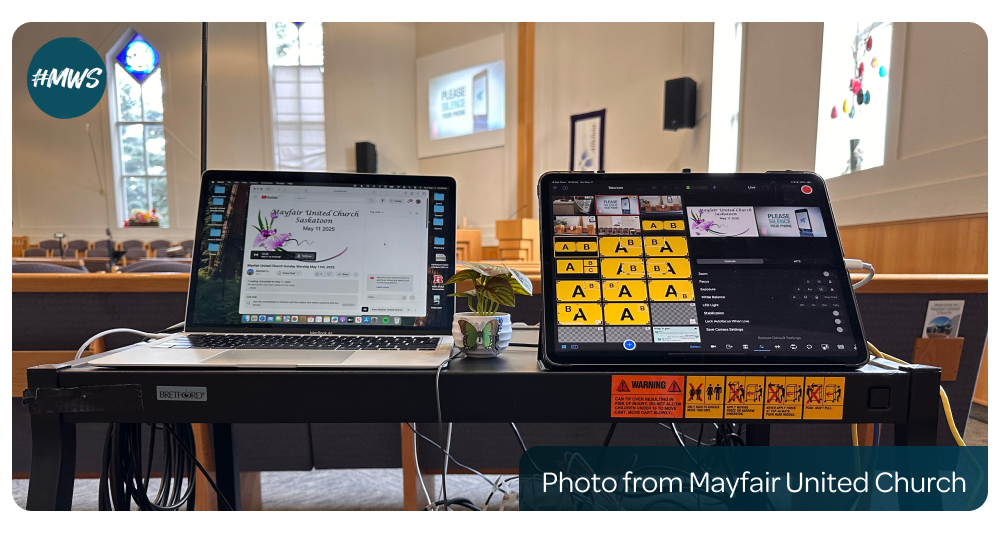
A more advanced setup (larger teams, full production)
For larger ministries, live streaming becomes a full experience, not just a broadcast.
You may be managing:
-
Multiple cameras across the room
-
A full audio mix from your soundboard
-
Graphics, lyrics, and speaker overlays
-
Streaming to multiple platforms at once
-
Recording for replay and clips
At this stage, complexity can creep in. Different tools for video, graphics, streaming, and recording can pull your team in too many directions.
It helps to bring everything into one workflow with a platform like Switcher, so your team can focus on the service, not the system.
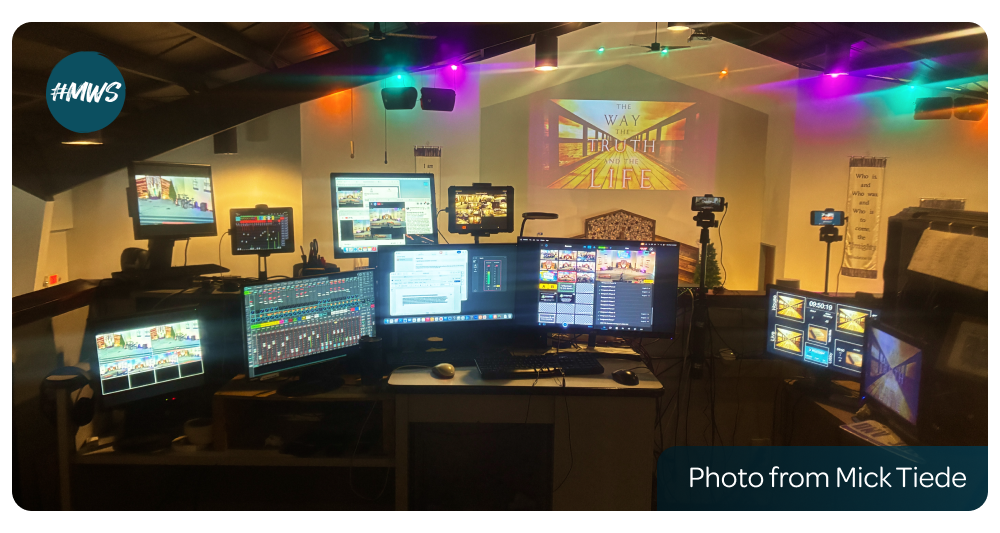
How to run your church live stream with confidence
The goal isn’t perfection, it’s confidence.
When your setup feels steady, you can focus on what matters: your message and the people on the other side of the screen. A little preparation creates that stability.
Rehearse with intention
Start by walking through your stream before it happens:
-
Run a simple tech check
-
Make sure your cameras, audio, and internet connection are working together
-
Practice your flow: How do you open? Where do you transition? How do you close?
When you’ve practiced your rhythm, you can show up more present — and your audience can feel it.
Set yourself up for a smooth stream
Give yourself time to test early, not minutes before you go live.
-
Set up your tripods and cameras
-
Log in to Switcher and connect your devices
-
Choose a strong, private internet connection — if possible, avoid crowded public networks
-
Set up your microphones and check your audio levels
-
Make sure your graphics are ready and load correctly
-
Start a test live stream and watch it back so you can experience it how your audience will, and make any necessary adjustments
This preparation will allow you to relax and enjoy creating a meaningful church live stream.
Prevent unwelcome interruptions
And take care of the small things that can sometimes prevent big interruptions:
-
Turn off automatic updates on your devices so they don’t restart halfway through a church live stream
-
Restart your streaming devices before you go live
-
Bring backup power and extra cables, just in case
-
Enable Do Not Disturb on every device to stop notifications from interrupting your church live stream
These details take minutes, but they remove stress when it’s time to go live.
Protect your stream from start to finish
Prepare long before your Sunday morning setup. Test earlier in the week when possible, so you have time to troubleshoot or reach out for support.
Have a simple backup plan in place. For example, a second device logged into your account can help if your primary setup fails. Just keep in mind: if your internet connection drops, both setups may be affected, so it’s worth testing your network stability ahead of time.
And when your stream ends, don’t rush to shut everything down. Let your devices finish processing so your recording is saved without issues.
How to create a more meaningful online service
Streaming gets you online, but the experience you create is what keeps people coming back.
Once your setup is consistent and running smoothly each week, you can start improving how that experience feels.
Think about what it feels like to join your service from the other side of a screen.
-
Is it easy to settle in?
-
Is it clear what’s happening?
-
Is it engaging and worth staying?
Here are some tips to elevate your church live stream.
Start with purpose
When you go live, you’re creating space for people to feel connected, to be present, and to take part in something steady in their week.
So, before cameras or software, start with your purpose.
What are you inviting people into? A clear message. A moment of worship. A shared experience they can step into from wherever they are
Now make it personal. Why would someone choose to watch your church live stream today? What do they need? What might they be carrying with them when they press play?
Get this right, and everything else gets easier. Your stream feels grounded. Easier to follow. More meaningful to be part of.
Follow the same rhythm every week
The most meaningful church live streams often follow a simple, human rhythm:
-
A welcome that helps people arrive and feel included
-
A clear sense of what’s happening and why it matters
-
Guided teaching or worship that holds attention
-
Moments to respond, reflect, or interact
-
A close that gives people a next step
When this rhythm is clear, viewers don’t have to work to follow along. Over time, your service will start to feel comforting and familiar.
Utilize multiple camera angles
A single camera works, but multiple angles elevate how your service feels. They help your audience stay engaged, bring variety, and make the experience feel more dynamic and intentional.
You don’t need multiple cameras to get started. But once your setup is stable, adding a couple of additional angles can make the experience feel more engaging.
You can begin by connecting a few devices to capture:
-
A wide shot to capture the full room
-
A closer shot for the speaker
-
A secondary angle for music or moments of worship
Then switch between angles to help guide attention and show people where to focus.
Ultimately, streaming with multiple cameras helps make your stream feel more like being there in-person and less like watching from a distance.
Use graphics and lyrics with intention
Graphics and lyrics can support your message — or distract from it. So, use them to guide, not overwhelm:
-
Lower thirds can introduce speakers or highlight key points
-
Lyrics help people follow along and participate in worship
-
Slides can reinforce what matters most
Keep your designs clean and readable. And use consistent styles and colors so everything feels cohesive.
When used well, these elements don’t compete for attention. They quietly support the experience and help people stay engaged.
Make room for interaction
Live streaming isn’t a one-way street. Even simple moments of interaction can make people feel seen and included:
-
Invite viewers to respond in the chat
-
Ask a question
-
Encourage a short moment of reflection
-
Acknowledge online viewers by name when you can
These small signals tell your audience they’re not just watching, but that they’re truly a part of your community.
Over time, that interaction builds connection — and keeps people coming back.
Ready to start live streaming your church service with confidence?
You don’t need a perfect setup to begin. Just start with the gear you already have and choose a setup your team can run with confidence.
Remember, you don’t have to get it perfect from the start. You’ll improve over time, your team will grow more confident, and your process will get smoother.
At every stage, the goal is the same: reduce friction so your team can show up consistently.
If you’re wondering if there are affordable options for small churches to stream their services, Switcher’s built for exactly this. Run your entire church live stream from one place — camera switching, graphics, audio, multistreaming, recording, donations, and more.
Whether you’re just getting started or building something more advanced, Switcher helps your team show up with confidence every week. Start your free trial today.
Subscribe to the blog
Sign up to receive notifications whenever a new blog post is published. You may unsubscribe at any time.

Share
About the Author

River Law is a storyteller who writes for humans, with heart. Whether it’s helping global brands find their voice or giving startups the words to grow, River brings empathy and clarity to every project. An Englishman who calls California home, River finds his rhythm outdoors with his family.
All posts by River Law