<img height="1" width="1" style="display:none" src="https://www.facebook.com/tr?id=1229673850378097&amp;ev=PageView&amp;noscript=1">

    Enter your search terms and hit ENTER or use ESC to exit

    Switcher Updates

    What's fresh from Switcher?
    Check out our latest app updates and software release announcements.

    Meta Turns Facebook and Instagram Livestreams Into Paid Ad Units

    TL;DR:

    • Meta announced at Cannes Lions that livestreams on Facebook and Instagram can now be promoted as paid ads, turning live broadcasts into media units that reach audiences beyond existing followers.
    • The feature is currently only available through five US live commerce partner platforms.
    • Meta also expanded its creator affiliate program to 22 countries, adding Flipkart, Mercado Libre, and Lazada. This one is available to any creator, no partnership required.

    Let's take a closer look at each announcement.


    1. Live Video Ads on Facebook and Instagram

    Live Video Ads let businesses promote their livestreams as paid ads, reaching audiences beyond their existing followers while the stream is happening.

    Facebook Live

    On Facebook, those ads can be paired with Live Shopping Tools, so viewers who discover the stream through the ad can browse products, check prices, and complete purchases without leaving the broadcast.

    Meta says 3.5 billion people across its apps experience AI-enabled product discovery daily. These Live Video Ads are designed to put live content in front of more of those moments in real time, rather than after the fact.

    At launch, the feature is not available to all streamers. In the US, only customers of five partner platforms — CommentSold, Firework, LiveMeUp, Sprii, and TalkShopLive — can convert streams into ads.

    These are live commerce platforms with existing product catalog integrations built into their workflow. Broader access for streamers outside those platforms has not been announced.

    Instagram live
    What this means for streamers

    The use cases that stand to benefit most are time-bounded, community-facing broadcasts — the kind where the live moment has real value and where reaching new people would meaningfully change the outcome.

    For example:

    • A church running a live giving appeal currently reaches people who already follow the page. With Live Video Ads, that broadcast could surface to people in the same area who've never attended.
    • A sports organization streaming a game notifies its existing followers; promoted, it reaches local fans who don't follow the account yet.
    • A nonprofit streaming a fundraiser event can put paid reach behind something that only lives for a few hours.

    In each case, the broadcast stops being a notification to existing communities and starts being a discovery moment for people who don't know the organization yet.

    Right now that's only available through Meta's five commerce partners. If you're streaming through any other tool or workflow, this isn't something you can activate.

    But the direction is worth taking seriously before it opens up broadly. A stream promoted as an ad is a first impression for a stranger — which means production quality, framing, and audio matter more in that context than they do when you're broadcasting to people who already know you. The organizations that will get the most out of Live Video Ads when access expands are the ones that treat their streams that way now.

    2. Creator affiliate program expansion

    The affiliate expansion is the part any creator can act on today.

    Afilliates

    Meta added Flipkart in India, Mercado Libre in Brazil and Mexico, and Lazada across Asia to its Facebook affiliate partner network, and expanded affiliate tagging on Instagram to 22 countries total.

    Creators connect their affiliate accounts, embed product links directly in posts and Reels, and earn commissions when viewers purchase.

    No platform partnership is required. This is available broadly to creators in supported markets.

    Affiliate
    This builds on Instagram's return to affiliate commerce in late March 2026, when Instagram head Adam Mosseri announced that creators could tag affiliate products directly in Reels — a capability the platform hadn't offered since shutting down its native affiliate program in August 2022.

    The Cannes announcement scales that globally and adds major marketplace partners in markets where those platforms have significant commerce infrastructure.

    What this means for streamers

    One thing worth understanding before diving in: Instagram's affiliate purchases redirect viewers to the brand's app or website to complete the transaction. That's different from TikTok Shop, where the purchase happens inside the app.

    The extra step introduces friction, and it's worth factoring that into your expectations. How much it affects conversion depends on the product and the audience, but assuming it works the same as in-app checkout would be a mistake.

    For live streamers, the affiliate expansion creates a direct commission path that doesn't require any special access. If you mention or demo a product during a Facebook or Instagram broadcast, affiliate links give you a way to earn on purchases that result from that content.

    What to watch for

    Meta is assembling the pieces of a full commerce loop on live video:

    • Live Video Ads for discovery
    • Live Shopping Tools for in-stream conversion
    • Affiliate links for creator monetization
    • Virtual card checkout (coming this summer in partnership with Mastercard and Visa) for payment security

    Visa

    Right now those pieces are only fully connected for customers of the five partner platforms. But we can hope that Meta will roll this out to everyone soon.

    Still, for streamers already building on Facebook and Instagram, the direction is clear enough to be worth preparing for now.

     

    TikTok Bans AI Voices from Shopping Livestreams: What It Means for Creators

    TL;DR:

    • TikTok has updated its TikTok Shop policy to ban AI-generated voices, pre-recorded audio, and radio narration from shopping livestreams.

    • All verbal communication must be real-time and live, or sellers risk commission restrictions, content removal, and account bans.

    What did TikTok just ban?

    TikTok Shop updated its Requirements for High-Quality Videos and LIVEs policy in its US Academy to include a hard prohibition on AI-generated audio during promotional livestreams.

    TikTok Requirements

    Under the "Prohibited Content" section for livestreams, the policy now states:

    "Don't use non-real-time verbal interaction such as AI-generated voices, audio recordings, or radio."


    Sellers and creators are required to "engage directly with your viewers using real-time verbal or sign language communication and demeanor that is appropriate for all users."

    Any livestream that relies on AI-generated voices or pre-recorded narration instead of real-time interaction is listed explicitly as non-compliant content.

    The same policy update also bans:

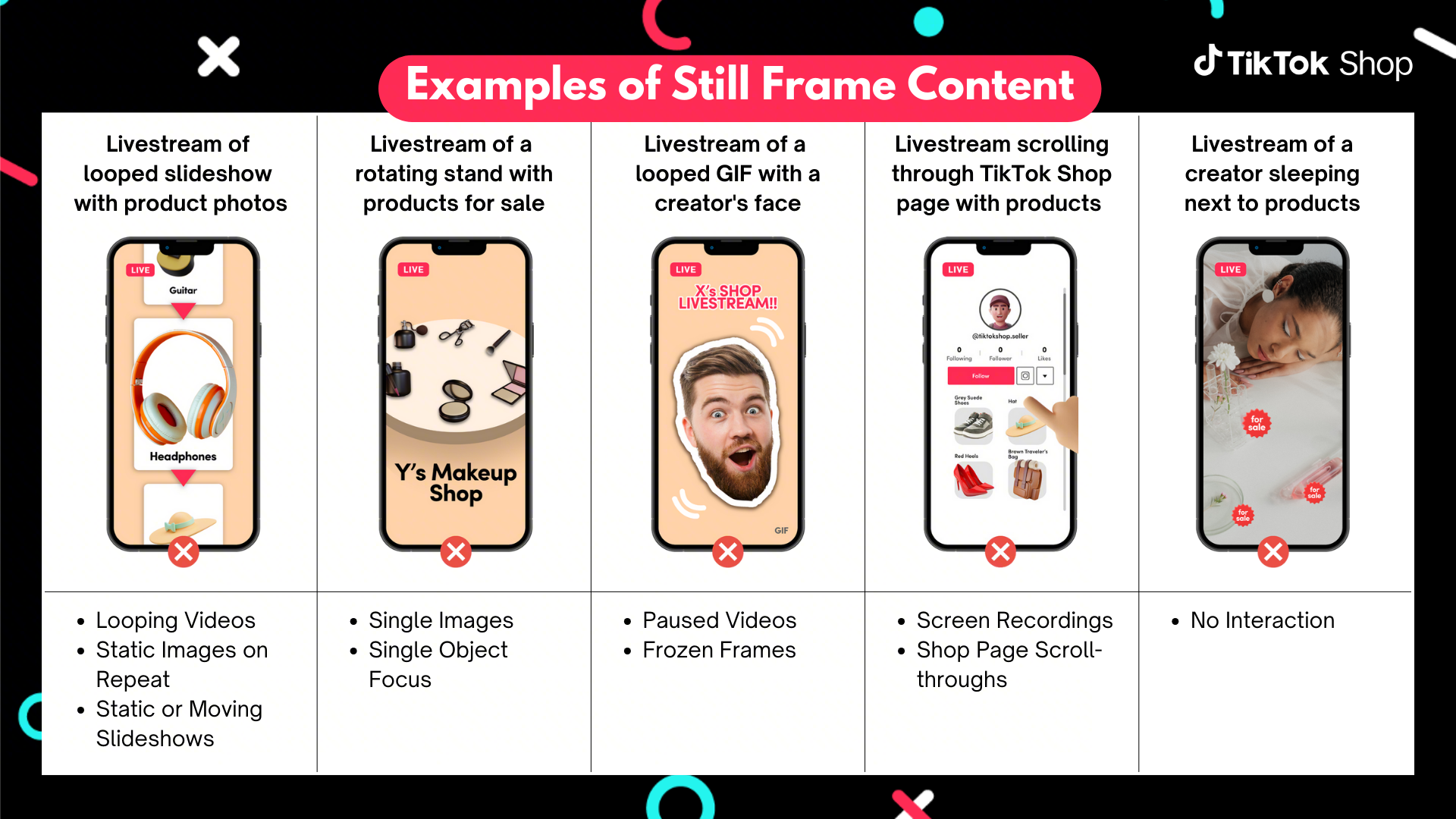
    • Still images, slideshows, or scrolling images covering more than 50% of the screen

    • Animated figures or virtual characters covering more than 50% of the screen

    • Overlaid product display page (PDP) screenshots during livestreams

    TikTok Bans Still Frame Content in Live Shopping Streams

    For recorded shoppable videos, content must:

    • Include at least three seconds of dynamic visuals without still images or loops

    • Feature the creator's face alongside the physical product

    • Be shot in a real-world environment with camera movement


    What are the enforcement consequences?

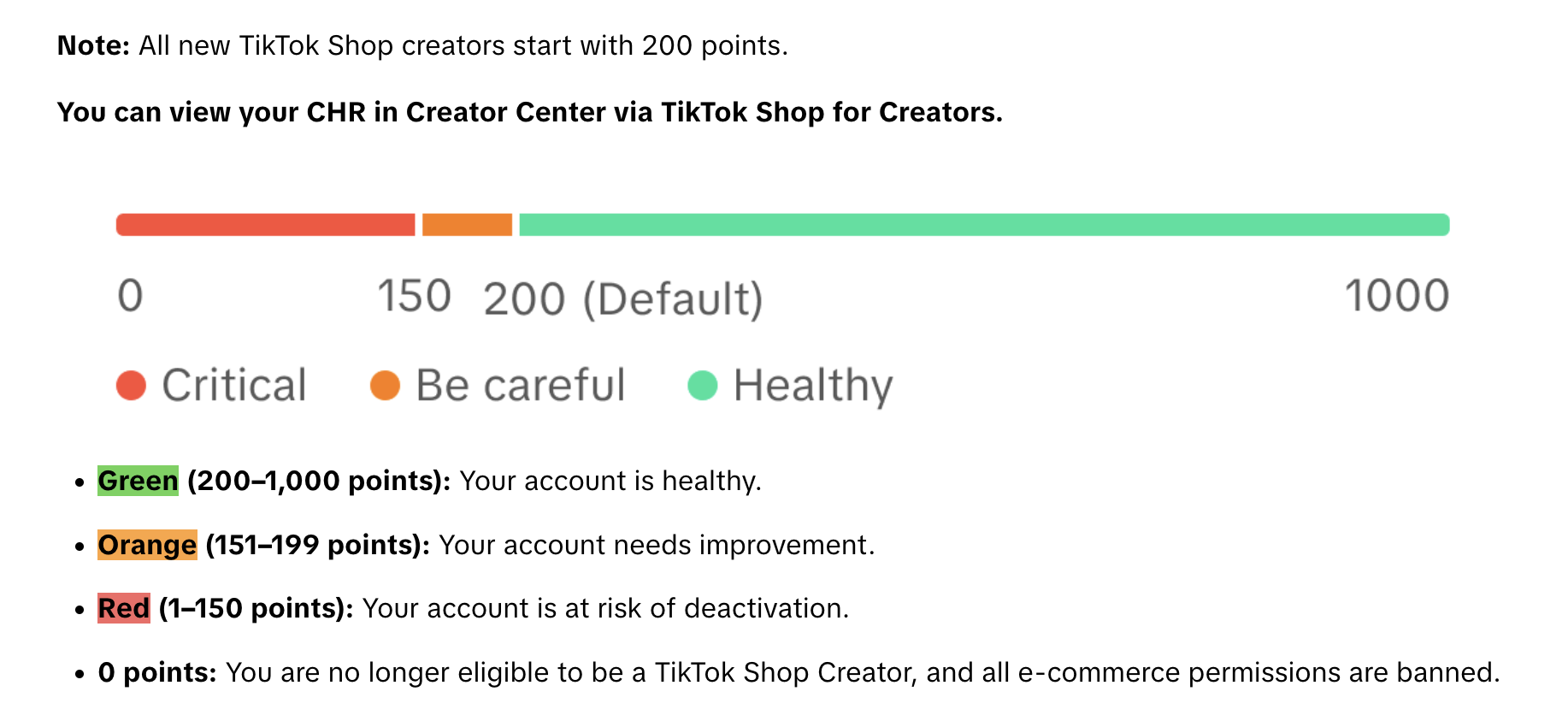
    This isn't a soft guideline — TikTok is enforcing it through its Creator Health Rating (CHR) system.

    TikTok Creator Health Rating (CHR)

    Violations can result in:

    • Assigned violation points

    • Content removal

    • Restricted access to features

    • Commission earning restrictions

    • Restricted or removed creator accounts

    Sellers can view their CHR status directly in TikTok Shop and appeal enforcement actions through the Creator Enforcement Policy.

    Why is TikTok doing this?

    TikTok Shop is projected to reach $23.4 billion in U.S. eCommerce sales in 2026 — a 48% increase year over year, placing it ahead of Target, Costco, and Best Buy by U.S. eCommerce volume.

    With that scale comes a quality problem.

    The probable driver is audience fatigue with low-effort, automated streams. When brands and sellers loop AI-generated narration over product images all day, viewers tune out — and don't come back.

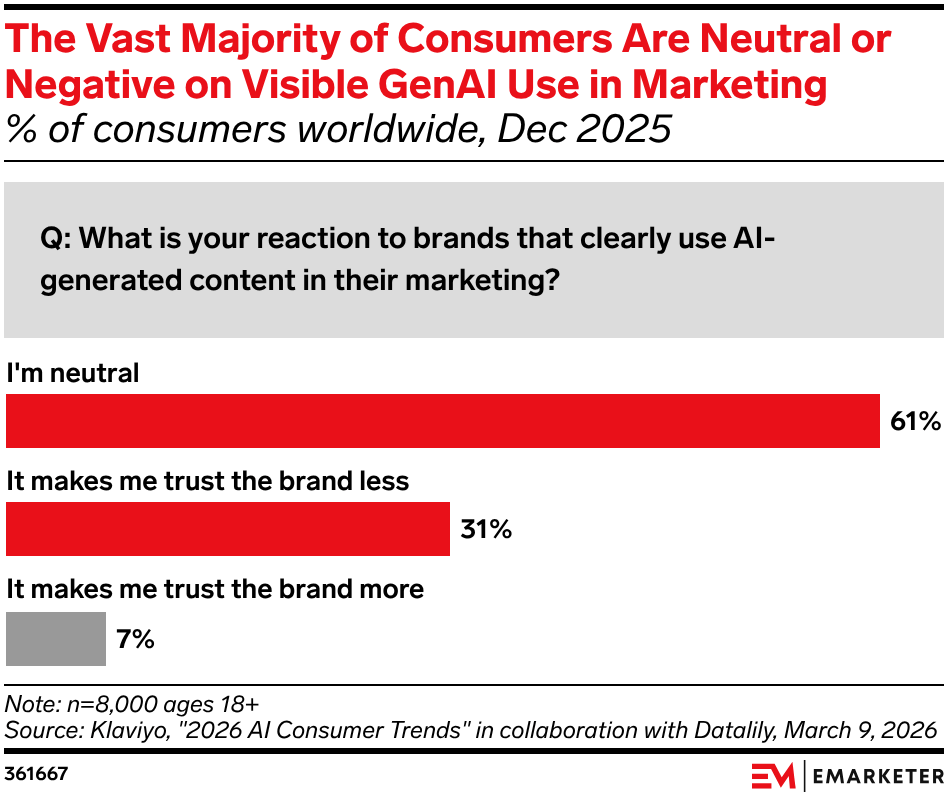
    When consumers notice AI-generated content in brand marketing, they're 31% more likely to trust a brand less.


    Klaviyo Data

    TikTok livestreams drove 84% year-over-year sales growth for participating brands during Black Friday and Cyber Monday 2025. The quality of those sessions is now a direct commercial variable, and TikTok's rules make clear who bears responsibility for maintaining it.

    What AI tools are still allowed on TikTok Shop?

    AI tools remain permitted when used in compliance with TikTok's broader AI content rules, including accuracy, transparency, disclosure where required, and avoiding misleading product claims.

    The ban applies specifically to AI standing in for real-time interaction during a live session, not to AI used before the camera goes on.

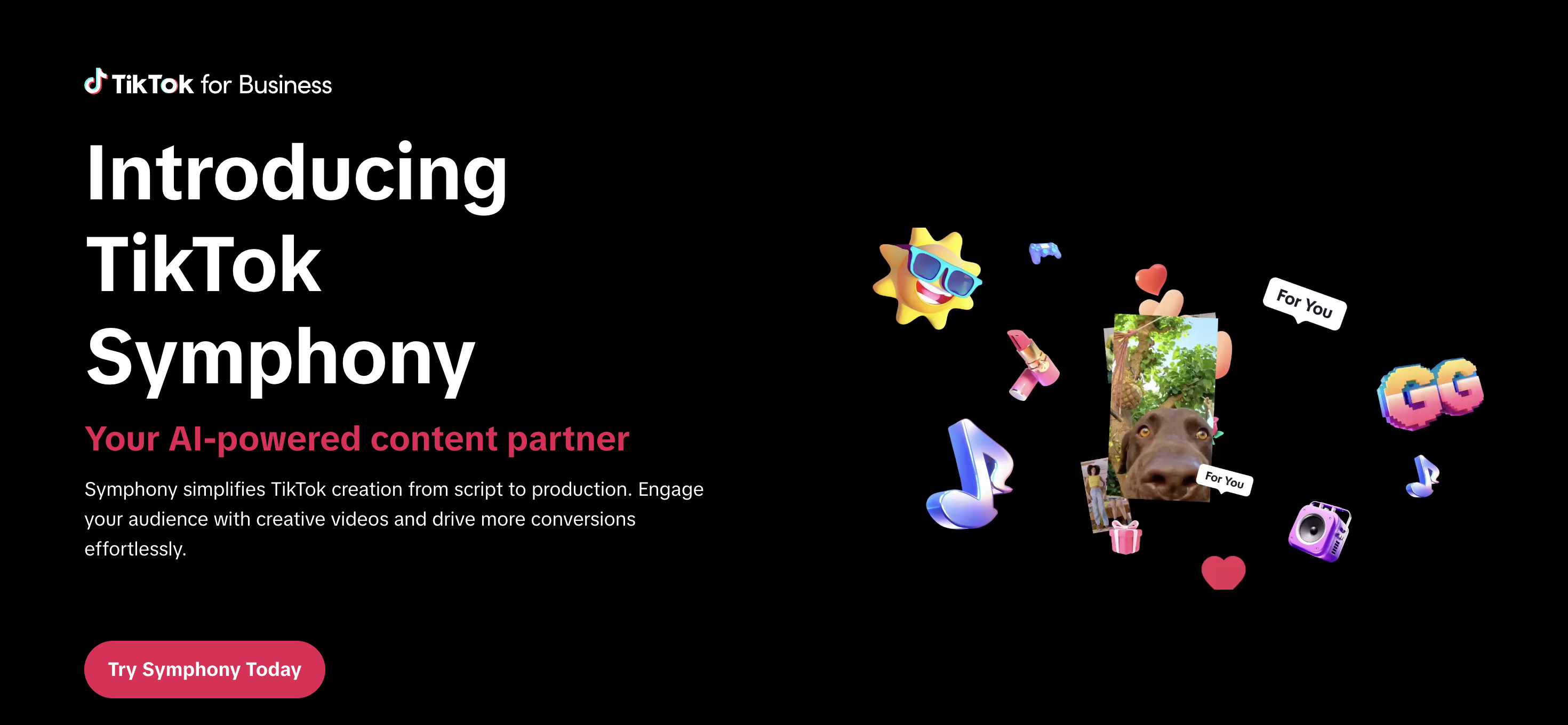
    TikTok's Symphony suite, which includes Dreamina Seedance 2.0 (ByteDance's next-generation AI video model), is still available for scripting, editing, and generating creative assets ahead of a stream.

    TikTok Symphony

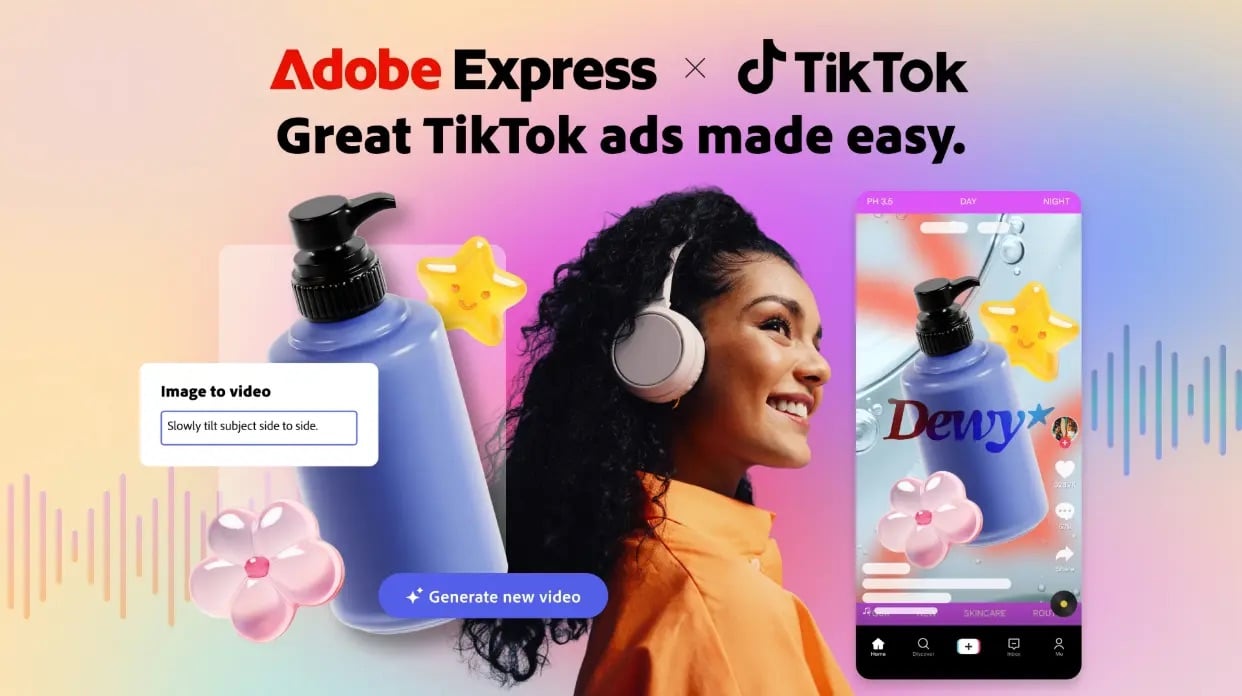
    TikTok also expanded Symphony through a partnership with Adobe, bringing AI video generation into Adobe Express.

    Adobe and TikTok Partner

    The distinction TikTok is drawing is structural: AI can help prepare the stream. It can't replace the real-time interaction inside it.

    This also runs counter to parts of the broader Chinese live commerce market, where virtual hosts and AI-assisted livestreaming have become a major production model. TikTok's US policy is moving in the opposite direction, at least for now.

    What does this mean for streamers?

    If you're running TikTok Shop livestreams, the practical implications are immediate:

    • Text-to-speech narration, looped audio tracks, and AI-generated hosts are all prohibited.

    • Real-time verbal or sign language communication is now required, not optional.

    The policy also sets affirmative production standards:

    • Adequate lighting

    • Stabilized footage

    • Clear synchronized audio

    • On-screen text that matches spoken dialogue

    Static or low-effort streams aren't just discouraged anymore — they're enforceable violations.

    This is a meaningful operational change for small sellers. Many low-budget TikTok Shop workflows rely on automated audio and still-image setups precisely because they're cheap and require no live presence. Those workflows are now barred from promotional content.

    The bigger picture, though, is that this is a level-playing-field shift.

    Creators who were already running live, high-quality, host-driven shopping streams now have a structural advantage over automated competitors. Real presence and real-time engagement are exactly what the platform is optimizing for.

    Where to go from here

    If your TikTok Shop streams are already host-led and live, you're ahead of the policy. But it's worth running a quick audit against the affirmative production standards TikTok also codified in the same update.

    Check that:

    • Your lighting clearly shows the product
    • Your audio is clean and synced to any on-screen text
    • Your camera is stabilized
      You're showing the physical product from multiple angles during demos.

    These aren’t just best practices, they're now enforceable requirements.

    If your workflow has leaned on automated audio or static visuals, the transition window is now. The Creator Health Rating system is active, violations accumulate points, and the consequences — commission restrictions, content removal, account bans — are real and compounding.

    Getting flagged once doesn't just hurt the stream it's applied to; it affects your overall account health score, which governs access to features across TikTok Shop.

    Review TikTok's official Requirements for High-Quality Videos and LIVEs directly to see the full policy language. The enforcement section and Creator Health Rating explainer are both linked from that page.