

TL;DR:
- YouTube announced three changes to the Partner Program (YPP): a new Shorts monetization threshold and tougher entry requirements for new applicants, both starting February 1, 2027, plus a revised creator revenue split that's already rolling out alongside Premium Lite's global expansion.
- Existing YPP members aren't affected by the new entry requirements. The Shorts monetization threshold will apply to everyone once it starts, current members included.
- YouTube says it expects to pay creators more in 2027 than it paid in 2026.
YouTube just laid out a set of changes to a program more than 3 million creators rely on, in a post on the YouTube Blog published August 10, 2026.
Here's the part that's easy to miss in the headlines: only two of the three changes are actually waiting until 2027. The third one's already live.
(We covered the last round of YouTube Live updates back in the spring; this time the news is about money, not features.)
What's changing in the Partner Program?
Three different things are changing here, and they don't all move on the same clock. Here's the quick version before we get into the weeds:
|
Change |
What it means |
When |
|
Premium Lite revenue split |
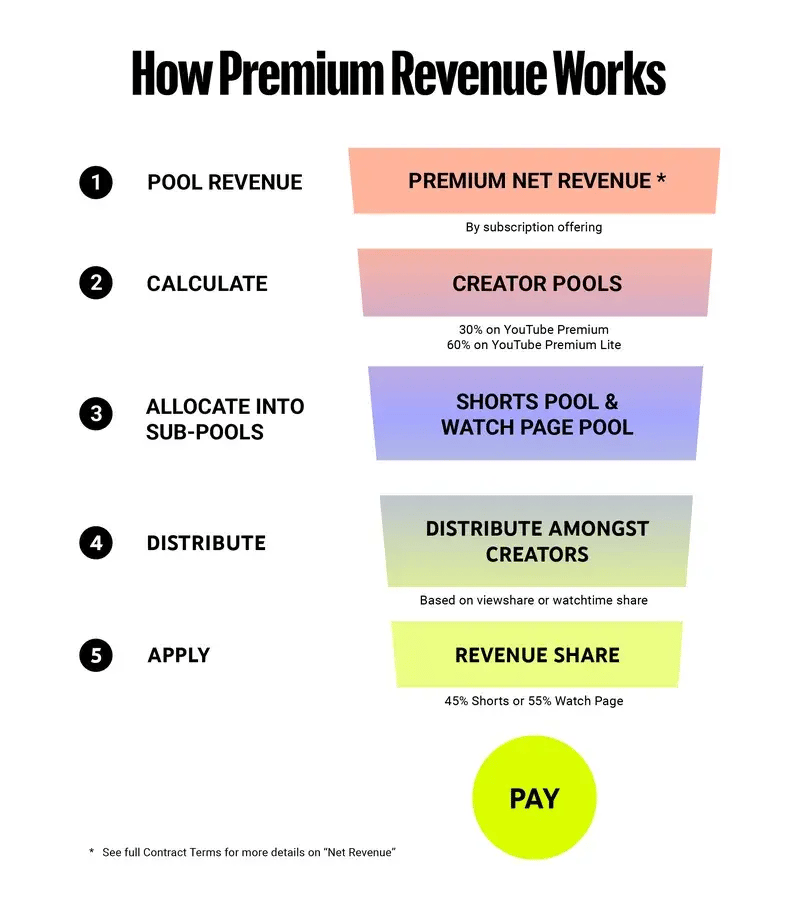
Creators earn 30% of Premium's net revenue and 60% of Premium Lite's; within that creator share, 55% goes to long-form, 45% to Shorts |
Already rolling out |
|
Shorts monetization threshold |
10 million qualified Shorts views in a trailing 90 days will be required to keep ads/subscription revenue on Shorts |
Starts February 1, 2027 |
|
New YPP entry requirements |
8,000 qualified watch hours in 365 days, or 20 million qualified Shorts views in 90 days, will be required to join |
Starts February 1, 2027 (new applicants only) |
How is Premium Lite changing the revenue split?
Unlike the other two changes below, this one isn't waiting for 2027.
YouTube is rolling out Premium Lite now, a lower-cost subscription tier with uninterrupted, offline, and background viewing, to every country that already offers YouTube Premium.
That expansion comes with a new revenue formula already in place: creators earn 30% of net subscription revenue from Premium and 60% from Premium Lite. Within each of those pools, the split is 55% for long-form video and 45% for Shorts.
It's a similar bet to the one Meta made with its live video ads push this year: move monetization toward formats the platform controls end-to-end, rather than the open ad auction.
YouTube's own explanation for why is refreshingly direct:
When a user signs up for Premium, partners, on average, earn more than when the user was watching ads.
Translate that: a wider Premium Lite footprint means more viewers sitting in that higher-earning bucket instead of the ad-supported one, and a bigger pool split among creators either way.
What's the new Shorts monetization threshold?
Here's the one with real teeth: starting February 1, 2027, creators need 10 million qualified Shorts views over the trailing 90 days to stay eligible for ads and subscription revenue sharing on Shorts.
Fall below that number and a channel doesn't lose its YPP membership, just its Shorts monetization, until qualified views climb back over 10 million. No reapplication needed. It just turns back on.
For scale: YouTube says the platform sees over 200 billion Shorts views a day (yes, billion, with a B). Ten million qualified views over 90 days is a tiny fraction of that platform-wide total, but it's still a real, sustained bar for a single channel to hold, not something one viral clip solves. (For more on how creators are already renegotiating their relationship with the platform's monetization rules, see our piece oncreators leaving YouTube.)
Starting the same date, YouTube is also introducing new ways for smaller channels to earn outside the ads-and-subscriptions split: Shopping bonuses, brand deal incentives, and bonuses tied to helping launch trends. Basically: other ways to make money while your Shorts numbers recover.
What are the new requirements to join the Partner Program?
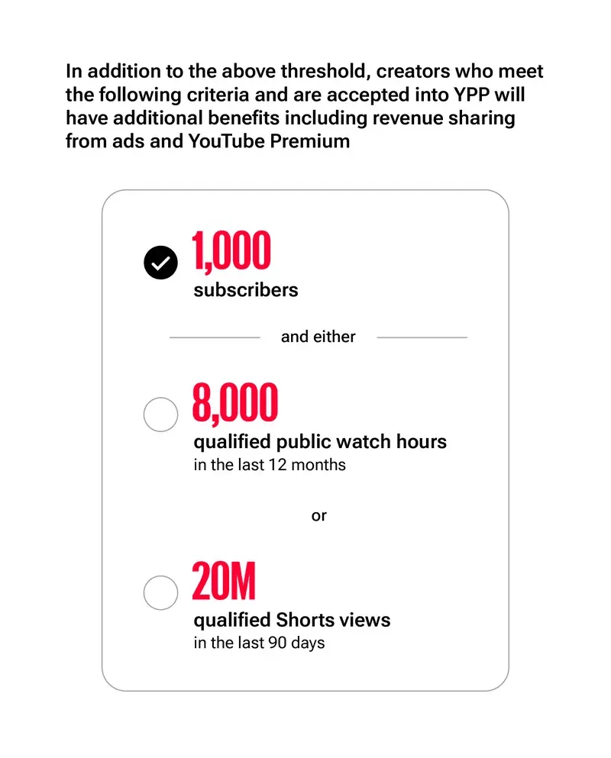
If you haven't applied to YPP yet, the door's about to get narrower. Starting February 1, 2027, new applicants will need 1,000 subscribers, the same baseline that applies today, plus one of two things: 8,000 qualified watch hours in the last 365 days, or 20 million qualified Shorts views in the last 90 days.
The subscriber count isn't changing; it's the watch-hours and Shorts-views numbers that are going up, from 4,000 hours and 10 million views today. Fan Funding and Shopping product eligibility thresholds are unchanged.
It's a different calculus than a platform like TikTok, where TikTok's Creator Rewards program has its own, much lower bar to clear.
Once the new rules are in effect, that 20 million-view entry bar for new applicants will be double the 10 million qualified views existing Shorts creators need every 90 days just to keep earning after they're already monetized. Getting into the program through Shorts will be harder than staying monetized on Shorts.
If you're already in the program, none of this touches you. It's for anyone applying for the first time after the change takes effect.
What this means for streamers
If you stream long-form, the entry math already favors you
If you're using YouTube Live to broadcast something long-form (a Sunday service, a tournament, a multi-day conference), here's the good news: the practical read is better than the headline numbers suggest.
Watch hours build naturally from a broadcast that runs an hour or two and gets rewatched afterward as a VOD. That's a very different bar than 20 million Shorts views in 90 days, and it means you don't need to become a Shorts creator to qualify.
You just need to keep doing what you're already doing. Smart audience retention tactics on that replay keep the watch-hour math climbing well after the live broadcast ends.
Premium Lite is the quieter win
The Premium Lite expansion is the quieter, more consequential change for that same group.
Within the creator share of both Premium and Premium Lite revenue, long-form video keeps 55%, and Premium Lite is rolling out to every market that already carries Premium.
If you stream and republish long broadcasts, more of your future revenue is set up to arrive through subscriptions instead of ads, and you don't have to change a thing about how you produce.
Watch the Shorts threshold if clips are part of your strategy
The Shorts threshold matters most if Shorts already carry real weight in your strategy: say, if short recap clips are what drives people back to your full broadcast.
Losing Shorts monetization for a stretch doesn't touch revenue from your long-form VOD, but it's worth tracking that 90-day qualified-views number if Shorts income is part of your plan.
Starting a new channel? Here's the real bar
If you're weighing whether to start a new channel instead of folding a livestream into an existing one, the math is about to change: starting February 1, 2027, a new channel will need 8,000 qualified watch hours over a year through long-form content, or 20 million Shorts views in 90 days, before it can count on ad and subscription revenue.
Here's a rough way to think about that: 8,000 watch hours over 365 days averages out to roughly 22 hours of aggregate viewer time a day, meaning total time all your viewers spend watching, not hours you spend streaming.
Run that forward for a channel that streams once a week: each broadcast needs around 150 aggregate viewer-hours to stay on pace, somewhere in the range of 100 to 300 regular viewers per session depending on how much of it they actually watch, live or as a replay.
Stream two or three times a week and that per-session bar drops. It's a realistic target if you've already got an established church, sports program, or business audience. It's a much longer runway if you're starting from a handful of regular viewers, so it's worth running your own numbers instead of assuming they'll land in your favor.
None of this requires a new production setup. It just means it's worth checking the numbers already sitting in your YouTube Studio (watch hours, Shorts views, current YPP status) before February, so nothing about the change catches you off guard.
Frequently asked questions
Do the new YPP entry requirements apply to my existing channel?
No. The 8,000-watch-hour and 20-million-Shorts-view thresholds apply only to creators applying for the first time after February 1, 2027. Existing YPP members keep their current status.
What happens if my Shorts views drop below 10 million?
Once the threshold starts on February 1, 2027: your channel stays in YPP, but it loses eligibility for ads and subscription revenue on Shorts specifically. Monetization resumes automatically once qualified views climb back over 10 million in a trailing 90-day window; there's no reapplication process.
When do the YouTube Partner Program changes take effect?
The Shorts threshold and the new entry requirements both start February 1, 2027. The Premium Lite rollout and its revenue split are already underway now. YouTube says creators can review and sign the new terms in YouTube Studio ahead of the February date.
The bottom line
The headline is "YouTube just made it harder to get paid." The more useful version is that long-form live content just got a clearer path into the Partner Program and a bigger cut of where the platform's money is actually growing.
If you're already streaming full services, games, or events, there's no strategy overhaul required here, just a couple of numbers worth checking in YouTube Studio before February.
That's the kind of streaming Switcher Studio is built for: produced, multicam, long-form broadcasts that hold an audience over time instead of chasing a 15-second hit. If that's already how you stream, or how you're thinking about starting, this update is worth factoring in, and worth trying with the gear you already own before you commit to anything bigger.