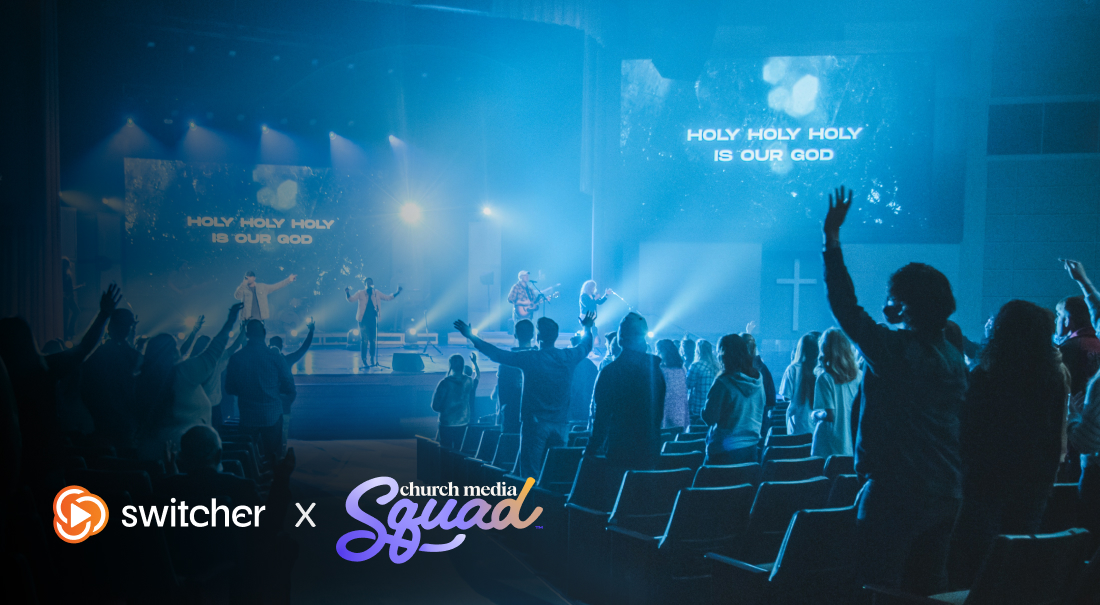
Your Sunday service ended an hour ago. The stream is over. The congregation has gone home.
And somewhere in a cloud folder, there's an hour-plus of produced content that most churches will never touch again.
That's the miss.
Every Sunday service is sitting on far more content than most churches realize: testimonials, illustrations, worship moments, real human reactions, and a message that took all week to prepare.
Most of it gets consumed once, live, by whoever happened to be watching. And then Monday arrives, the next week begins, and all of it gets left behind.
It doesn't have to work that way.
We asked the team at Church Media Squad (a group of video and marketing professionals who work with churches every day) to break down how churches can build a repeatable system for turning one Sunday livestream into content that reaches people all week long.
Why is all this content going to waste?
Part of it is just the pace of church life. As Jay, a video designer at Church Media Squad, put it:
"It often gets overlooked because 'church' is something that happens 52+ times a year, and by Monday we're so often focused on moving into the next week.
In that process, there isn't always space to look back at what just happened and see it as ongoing content that can continue to reach people beyond Sunday."
The other part is a mindset problem. Jamicah, another video designer at Church Media Squad, sees it all the time:
"One of the biggest things I see is that churches treat the finished livestream as the final product — like it is something you cannot go back and shape or build on. But in reality, that livestream is just the raw material."

Where should a stretched-thin church actually begin?
Not with a full content strategy. Not with new hires. With one simple rhythm.
Mallory, a video designer at Church Media Squad, keeps it straightforward:
"I would start simple. Take one message and pull 2 or 3 meaningful clips from it each week. Build a rhythm around that. And always keep the goal in front of you — it is not just posting content, it is helping point people to Jesus throughout the week.
The first system I'd put in place is a weekly rhythm — same day, same process, every week.
For example: Monday you pick clips, Tuesday you post. Keep it repeatable and spread it out a little so it doesn't feel so overwhelming. Once that's locked in, you can always build from there.
But consistency is what actually moves the needle."
Roman, another video designer on the team, adds that the easiest first step is already within reach for most churches:
"Having a version of the livestream uploaded to YouTube, Facebook, or a church website is a great first and easy step to give access to more content interaction using the footage you already have.
From there, you can explore one of the many ways to capture snippets from the sermon for Reels on Instagram and create more engaging short-form content."
What moments actually work when repurposed?
Not everything from a Sunday service is clip-worthy — and that's fine. Jamicah calls the ones worth capturing "amen moments":
"I am listening for what I would call 'amen moments.'
Those are the moments where you hear something and instantly know it can impact someone.
It is clear, relatable, and something you would actually want to share — especially with someone who may not be a believer."
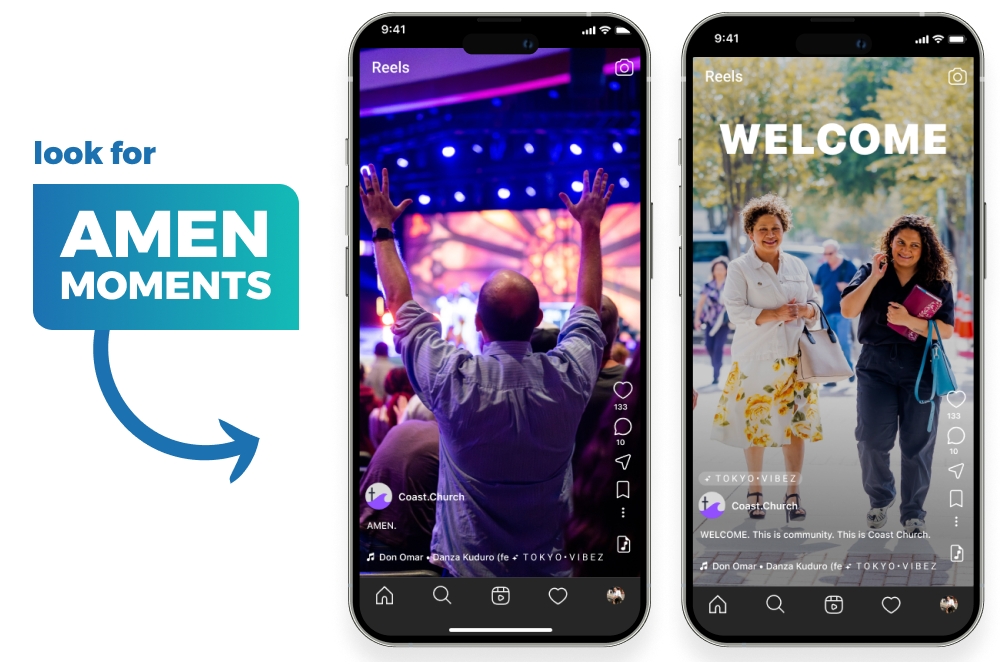
His rule of thumb is simple: if something makes him pause, think, or feel something, that's usually a strong indicator. If he'd share it with someone, it's probably worth clipping.
Jay sees two types worth capturing: moments that show what the church experience is actually like, and moments that are complete enough to stand on their own without any context:
"The strongest moments often overlap both categories. When something lands emotionally in the room and people visibly respond to it, it usually translates well on social — especially when you can package it with the right hook to get people to watch."
Andi, also a video designer, points out that some of the most shareable moments happen before the sermon even starts:
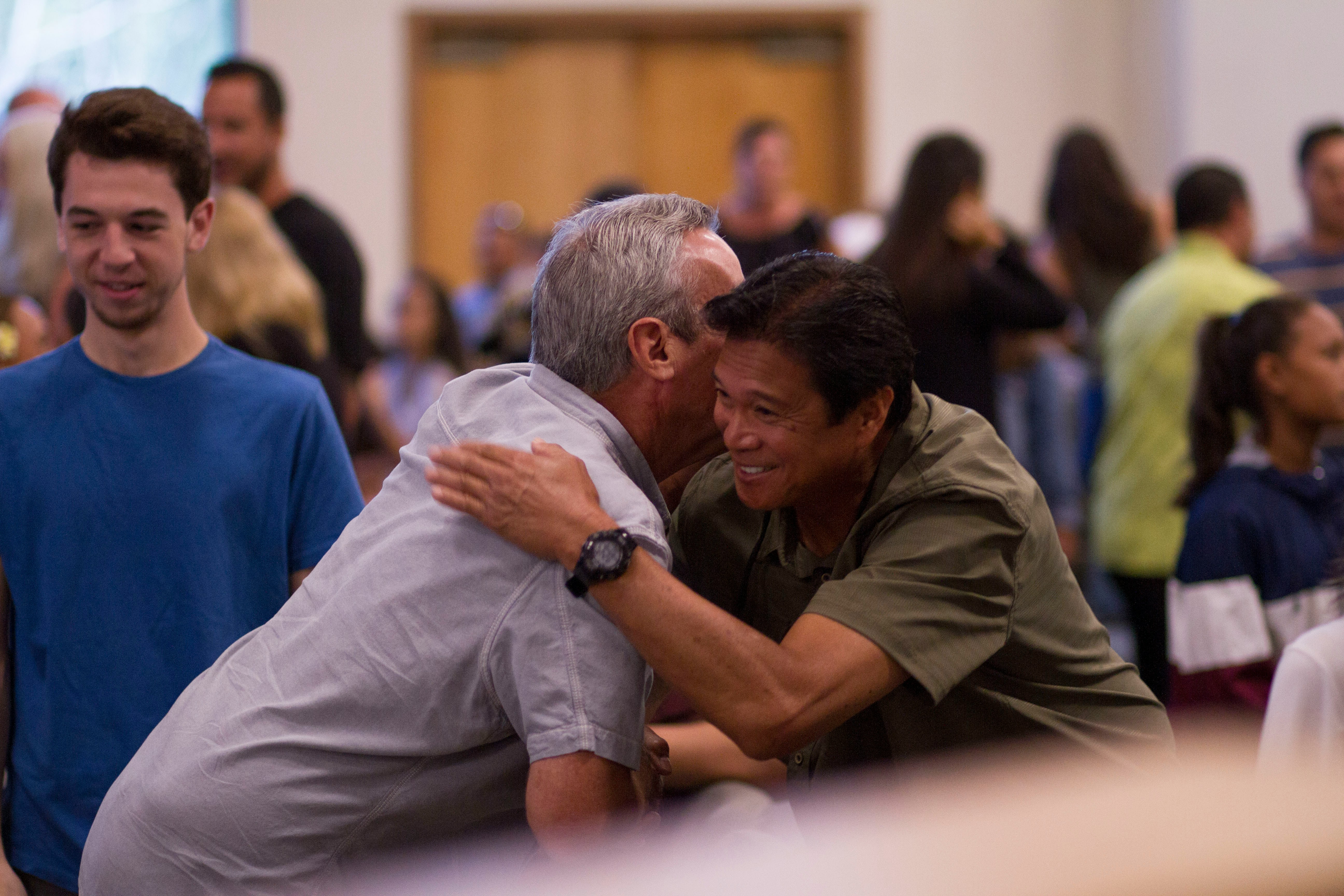
"Some of the most valuable moments sometimes happen before people even walk into the sanctuary: that first encounter, sharing coffee, having conversations.
There's a spontaneity there that could be incredibly well used on social media. People are relaxed, and you hear voices that aren't usually the ones at the microphone.
With the right ideas, you can create genuinely great content without losing the essence of what that first encounter between brothers and sisters really means."
What does an effective weekly workflow look like?
The most effective live streaming workflows start early — ideally before Sunday even arrives.
Andi plans content before the service even happens:
"Ideally, with good service pre-production, we can already think through what organic content we'll have available for the following week.
That means knowing in advance what content will be featured in the service, the timing, and the people involved in making it happen.
I think getting ahead of things that way is key — so that afterwards we can focus on the moments that came up spontaneously during the service, the ones that are genuinely shareable on social, and dedicate time to polishing those moments."
Once you're in the room, Jay's approach is to start capturing immediately:
"If you want to get a headstart, start a stopwatch right as the sermon starts while you're in the room, and take notes based off the timestamps.
Anything that seems even remotely helpful, make a note of what it is and what time it was said. … Don't worry about it looking perfect — content is king. Does this help me? Would it help others?"
Jamicah's advice for churches that tend to overcomplicate the curation step:
"The goal is to take what naturally works and use it well. If there are not strong, clear moments that week, it is okay to leave it.
This is not about chasing content. It is about communicating clearly without misrepresenting the message."
It also doesn't have to fall on one person. Mallory sees the best results when it's shared:
"Some of the best workflows I've seen are collaborative.
One person listens and pulls notes, another edits, and someone else gives a quick gut check on clarity. That kind of teamwork makes consistency a lot more realistic."
How should clips be edited for Instagram, TikTok, and YouTube Shorts?
The hook is everything. Jay’s direct about it:
"If the first few seconds don't give someone a reason to stop the scroll, nothing else really matters.
You're trying to interrupt everything else they're already watching and give them a reason to stay — whether that's personal relevance or curiosity."
Jamicah pushes back on the trend toward over-produced edits:
"There has been a rise in highly stylized edits with flashy graphics, heavy captions, and a lot of visual effects. Those things can grab attention for a moment, but when everything starts to look like that, it quickly turns into noise.
What people are really looking for is something that feels simple, relatable, and human. Connection drives engagement."
She flags something specific to faith-based content in particular:
"Content that feels overly polished can create skepticism, especially with faith-based messaging. The more natural and authentic it feels, the more opportunity you have to build trust."
Roman flags a common mistake that quietly hurts quality:
"Uploading a livestream to YouTube without trimming away any fluff — like a countdown timer — can hurt engagement.
Creating a Reel using the uploaded YouTube video rather than the original footage can decrease quality, since videos uploaded to YouTube get compressed before you can download them."
Always go back to the original footage.
How should churches think about distribution?
Mary, who leads marketing at Church Media Squad, reframes the whole question:
"Think of your Sunday service more like a content library, not a finished product.
From one message you can pull sermon clips for short-form, worship moments for organic reach, behind-the-scenes for community building, and quote graphics for mid-week engagement.
The service already happened. The content is already there."
Different platforms reach different people — and Mary is clear on where to start:
"The goal isn't to be everywhere. It's to be consistent where it counts.
Start with wherever your congregation actually lives, then work outward. For most churches that's Facebook first, then Instagram, and platforms like TikTok for reaching people who would never watch a full service."
What should churches expect once they start doing this consistently?
Mary is specific about which metrics move first — and it's not likes:
"The metrics that move first are saves and shares — not likes. It means people find the content worth keeping or passing on.
Reach and new audience growth usually follow, especially once the content starts reflecting a clear, consistent identity — people begin to recognize what your church is about before they ever walk through the door."
The other shift is internal — and Mary is direct about it:
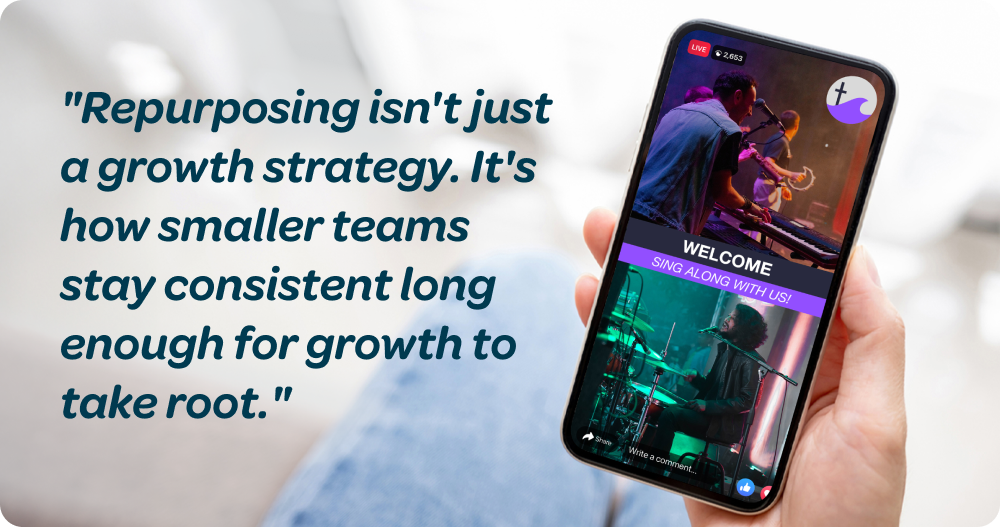
"Repurposing isn't just a growth strategy. It's how smaller teams stay consistent long enough for growth to take root."
What if you don't have anyone to do this in-house?
Most churches don't. And the answer isn't to wait until they do. Mallory describes where Church Media Squad fits in:
"Even in larger churches, time is the biggest challenge. That is where we step in.
We help build a simple, repeatable system and handle the editing so churches can stay consistent without adding more to their plate. The heart behind it is making sure their message continues to reach people during the week and not just on Sunday."
Roman frames it in terms of what it frees up:
"Church Media Squad takes the majority of the burden of social content creation off the church, so the church staff can focus their attention on connecting with people rather than gaining clicks."
The goal is never “more content.” It’s more connection — and church staff has more capacity for that when they're not also running a content operation.
What's the mindset shift that makes all of this stick?
Mallory puts it simply:
"The biggest shift is seeing Sunday as the starting point, not the finish line."
For churches that feel like they don't have enough to do this well yet, Mallory pushes back directly:
"You do not need to be perfect, you just need to be faithful with what you have."
The purpose behind all of it matters more than any metric:
"Do not lose sight of the 'why.' The goal is not just more views or more content. It is reaching people. It is helping someone hear the truth at the right moment and to turn their eyes toward Jesus.
I think sometimes we get caught up in measuring our success by the number of views or likes a reel gets. The reality is, even if only one person sees it, if only one person takes a step towards Jesus, then all the work is worth it."
Your Sunday stream is already doing the work. Let it keep going.
Your Sunday service livestream already produces an hour or more of recorded content. All that's left is a system for capturing the best of it and putting it to work.
Switcher Studio makes it easy to produce pro-grade livestreams with the devices you have, and repurpose that content for social media channels throughout the week. Try Switcher free for 14 days.
And if your team is stretched thin, Church Media Squad can turn one Sunday service into content that will reach people all week. The Squad also handles your weekly graphic design, web, social media, video, and branding needs, so your team can get back to people ministry.
Subscribe to the blog
Sign up to receive notifications whenever a new blog post is published. You may unsubscribe at any time.

Share
About the Author
River Law is a storyteller who writes for humans, with heart. Whether it’s helping global brands find their voice or giving startups the words to grow, River brings empathy and clarity to every project. An Englishman who calls California home, River finds his rhythm outdoors with his family.
All posts by River Law